
Fair Lawn Resident Lookup Records
Official records answer different parts of a Fair Lawn identity question. The municipal court can help a person with a complaint or ticket find that matter, while the New Jersey court system separates civil, criminal, judgment, tax, and municipal searches. The Fair Lawn Tax Assessor maintains assessment and transfer context, although an assessment entry is not a household list. New Jersey vital records are restricted and are requested from the Fair Lawn Registrar only when the event occurred in the borough, or from the state for the appropriate record. Use each result as a dated record lead, not as a complete account of a person.
| Record | What It Can Confirm | Custodian | Access Route |
|---|---|---|---|
| Assessment context | Parcel address, block and lot, annual assessment details | Fair Lawn Tax Assessor | Assessor inquiry or NJGIN map layer |
| Land recording | Named parties, recording date, document type, legal parcel clues | Bergen County Clerk | Online records from 1970 forward, then county records division |
| Court case metadata | Named party, venue, docket, caption, and initiation date where public | NJ Courts or Fair Lawn Municipal Court | Category search, complaint route, clerk request, or EAP |
| Vital event copy | Eligible copy or informational certification of a Fair Lawn event | Fair Lawn Registrar or NJDOH | Application, identity proof, and required relationship proof |
| Voter record | Individual registration-status result or a requested county list | NJ Division of Elections or Bergen County Clerk | Status check or focused written request |
When only a name is known, begin by collecting a distinguishing date, middle initial, municipality, or address from a source that states one. A deed party is not necessarily a current resident, and a court venue does not establish residence. The record trail becomes more reliable when every later search carries forward the source date and the exact spelling used by the record.
Match a Fair Lawn Resident in Court
The NJ Courts Find a Case service is the starting point for public court databases, but it is not one universal name search. Civil and foreclosure case-jacket searching uses a party-name option with Individual or Business, required last name, required first name, and optional middle initial. The guide describes exact name matching. Municipal matters take a different path: NJMCDirect is most useful when the person has complaint or ticket information, and the Fair Lawn Municipal Court can answer case-specific questions by phone or email. A new municipal complaint can take one to four days to appear.
| Fair Lawn court search field | How it is used |
|---|---|
| Individual or Business | Sets the party type for the civil or foreclosure party-name search. |
| Last and First | Required for the individual party-name mode and compared as an exact name match. |
| Middle initial | Optional detail that can help separate matching names. |
| Docket number | Opens or identifies a specific case jacket when known. |
| Complaint or ticket number | Useful for the municipal case and payment route. |
A public case-jacket result can show a name, venue, docket number, case caption, and case initiation date. It does not disclose an address field in the inspected result example. Record the docket and venue, then request a specific public document or a plain or certified copy through the court process if it is needed. EAP offers subscribed electronic access to several court systems at $4 per minute, without remote downloads or screen scraping. Federal matters belong in PACER, a separate account-based system for the District of New Jersey.
See the NJMCDirect municipal case landing page before using a complaint number or ticket number.
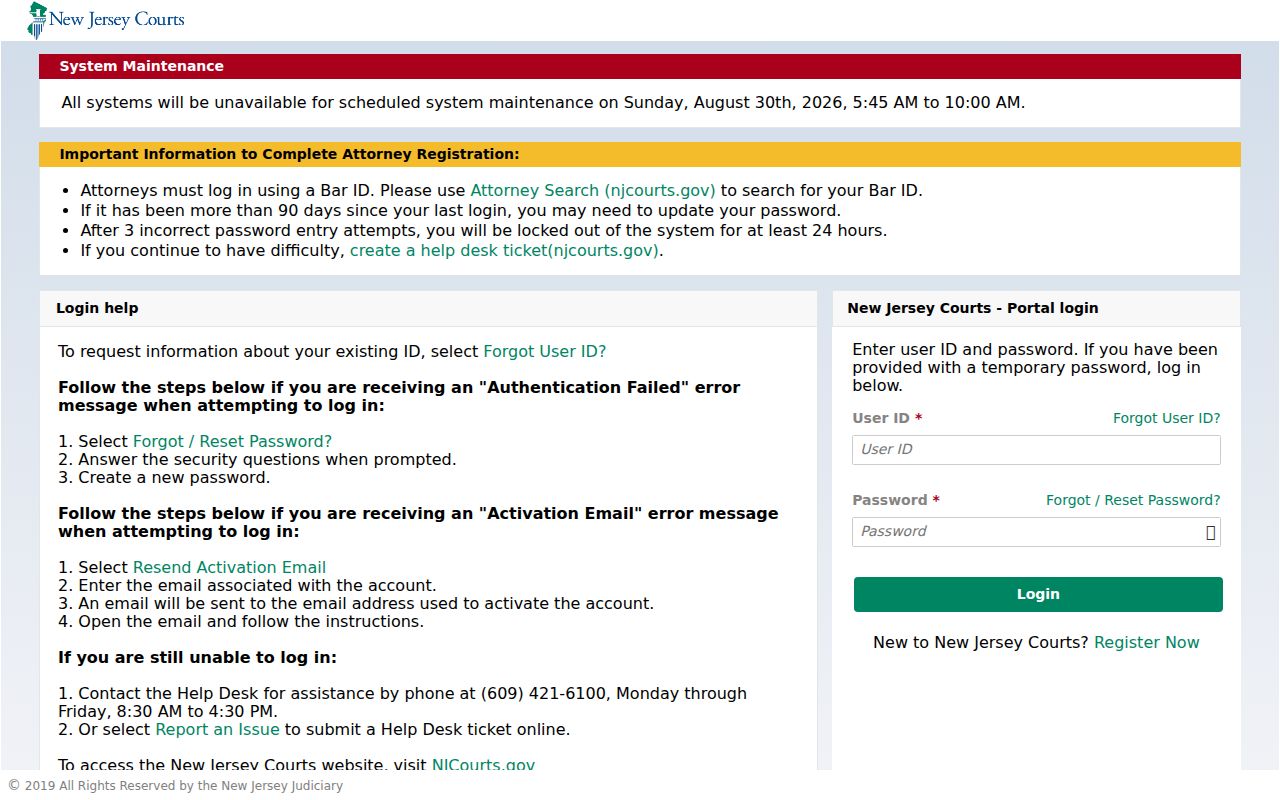
The municipal screen illustrates why a ticket-specific route is different from a surname directory. Contact the Fair Lawn court when a local case needs clarification.
Note: A charge, case name, or same-name result does not establish identity, residence, or a final outcome.
Fair Lawn Resident Lookup Vital Paths
Vital records are not publicly searchable online in New Jersey. For an event that physically occurred in Fair Lawn from 1924 forward, the Borough Registrar of Vital Statistics is the local route. The registrar is in Borough Hall, 8-01 Fair Lawn Avenue, and the Borough lists Marcy Kissane at (201) 794-5344 and mkissane@fairlawn.org. Call before sending a request because local copy fees and processing times were not posted on the inspected page. Births within 80 years, marriages within 50 years, deaths within 40 years, and all civil unions and domestic partnerships are treated as current or non-genealogical under the state guidance.
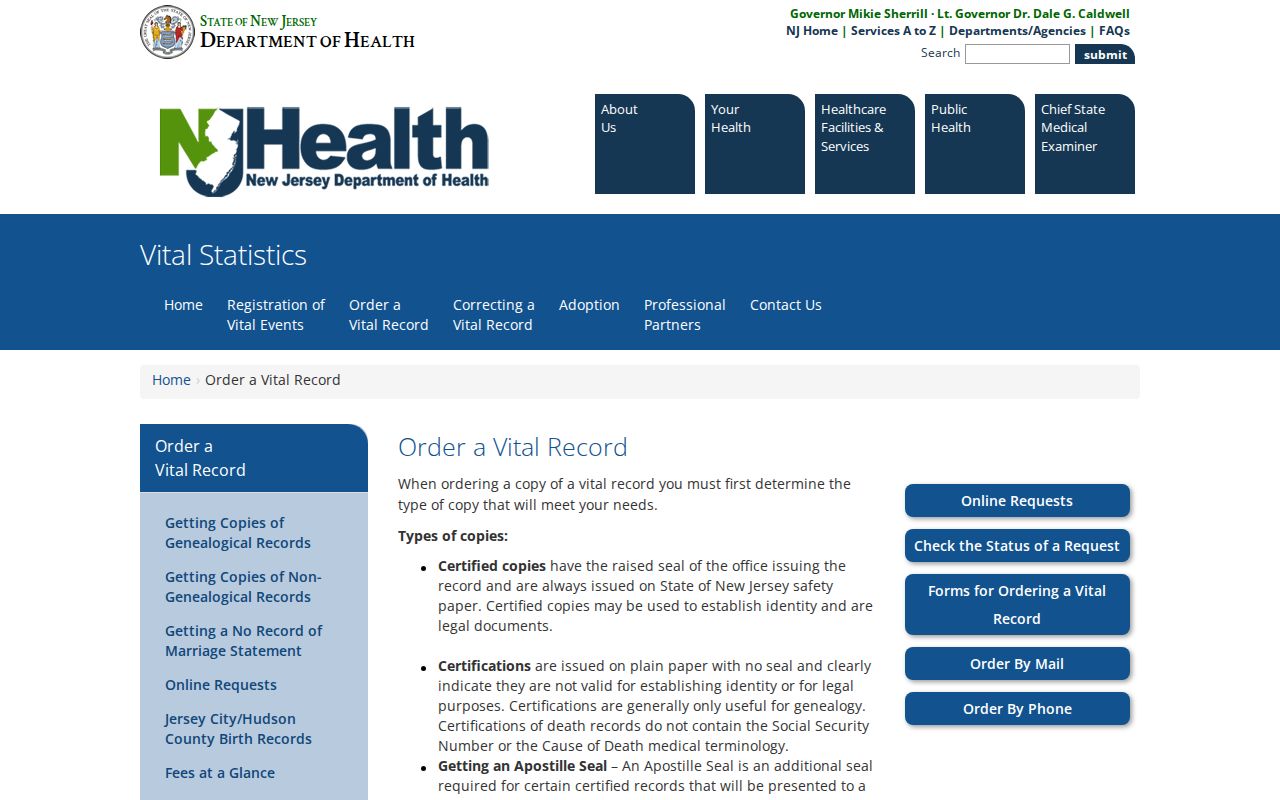
The New Jersey vital-record order process requires an application, identity proof, the correct fee, and relationship proof for a certified copy. Identifying details include the full name on the record, city and exact date of the event, plus parent or spouse information as applicable. A certification is plain paper for informational or genealogy use and is not valid for identity or legal purposes. A certified copy has a raised seal and safety paper. The state lists an initial search and copy at $25, with additional copies of the same record at $2; local Fair Lawn charges may differ.
The official New Jersey vital-record application page shows the documentation and order requirements for this type of request.
Older research follows a different route. The State Archives holds births through 1924 and marriages and deaths through 1950, while pre-incorporation events can be filed under Saddle River Township rather than Fair Lawn.
Fair Lawn Resident Lookup Needs Dates
A date reduces the same-name problem. For an obituary or household question, begin with the likely event window, then search the Fair Lawn-Radburn News and successor titles by the surname, street, cross street, and both borough spellings: Fairlawn and Fair Lawn. A newspaper entry can place a person at an address on a date, but it does not prove ownership or a present address. Preserve the publication title, issue date, page, column, headline, and the exact source wording before comparing it with an assessment, deed, directory, census, or probate record.
The Ridgewood Heritage Center is the regional directory and map fallback for Fair Lawn, including Price & Lee directories for 1931 through 1973. Its staff can be contacted for map appointments and collection access. A numerical directory section may distinguish a listed occupant, business, vacant address, institution, missing volume, or a name not found. Those categories should remain separate. A missing entry is not proof that a place was vacant.
Fair Lawn became a borough in 1924 as Fairlawn and adopted the current two-word spelling in 1933. Test Saddle River Township before 1924, Fairlawn for 1924 through 1932, and Fair Lawn afterward. That timeline is a practical historical research clue, not an excuse to merge records with different jurisdictions.
Verify a Fair Lawn Resident Record
Use a two-record check before treating a name match as the right person. The order depends on the question, but a name plus a parcel identifier or documented event date provides a firmer anchor than a name alone. Assessment data can lag a transfer, and parcel maps can redact owner names under Daniel's Law. For a property trail, copy the municipality, block, and lot from the map, then compare it with the Bergen County Clerk's recording index. For a court lead, preserve the docket, venue, caption, and date before requesting the underlying public record.
- Write the name exactly as it appears and add a middle initial, event date, or address when the source supplies one.
- Use the matching official index, such as a parcel layer, court category search, or county land-record search.
- Compare the result with a second independent record class, keeping the date and jurisdiction attached to each match.
- Ask the custodian for a specific document, plain copy, or certified copy only when the record and access rule support that request.
- Docket
- A court's identifying number for one case, used to locate the right case jacket or request.
- Index and image
- An index lists searchable record details; an image is the underlying scanned document when access allows it.
- Certified copy
- An official copy issued with the custodian's required certification, distinct from an informational record copy.
- Legal description
- The block, lot, municipality, or other parcel wording used to identify land in a recorded document.
A historical directory can support a dated household lead after this check. For the surviving directory volumes and their reading conventions, use the Fair Lawn city directory collection rather than treating a current person search as a historical list.
Fair Lawn Resident Lookup Request Routes
New Jersey's Am I Registered? tool is an individual status check that uses exact registered first name, last name, and date of birth. It is not a public household directory, and a no-match can reflect a spelling difference, date-of-birth error, moved registration, confidential handling, or a system issue. Bergen County voter lists take a separate written-request path. The County Clerk lists registered-voter lists at $0.25 per district and mail-in lists at $0.25 per page. Ask for the municipality, district range, election or list type, date, format, and available redactions before paying.
When no searchable index exists, the Fair Lawn Municipal Clerk is the local OPRA custodian. The Borough accepts the online OPRA form, email delivery, and a printable form delivered to Borough Hall. It asks for the department, record type, address or name, date range, and preferred delivery method. The Borough describes a written response within seven business days, subject to the request and OPRA rules. Since September 2024, the form also requires the three stated certifications about conviction, commercial purpose, and legal proceedings. OPRA does not override court sealing, vital-record restrictions, or address-protection rules.
Note: A narrow request for a named record and date range is more likely to reach the correct Fair Lawn custodian.
Fair Lawn Resident Lookup Business Leads
Business and license records can help distinguish similar names, but they are not resident records. The New Jersey Division of Revenue and Enterprise Services can provide a business-name filing lead, while a status report can include registered agent, business addresses, filing dates, officers, directors, managers, and legal status. The Division of Consumer Affairs provides person and business license verification for regulated professions. Use a license number and profession when available, then capture the verification date because status can change.
The NJ Treasury business records service groups status reports, filed-document services, UCC material, and notary resources. A business address may be a registered office or other filing address. It does not establish that a named individual lives in Fair Lawn or that an organization remains at a location.
The official New Jersey business-records page provides a useful name-disambiguation lead.
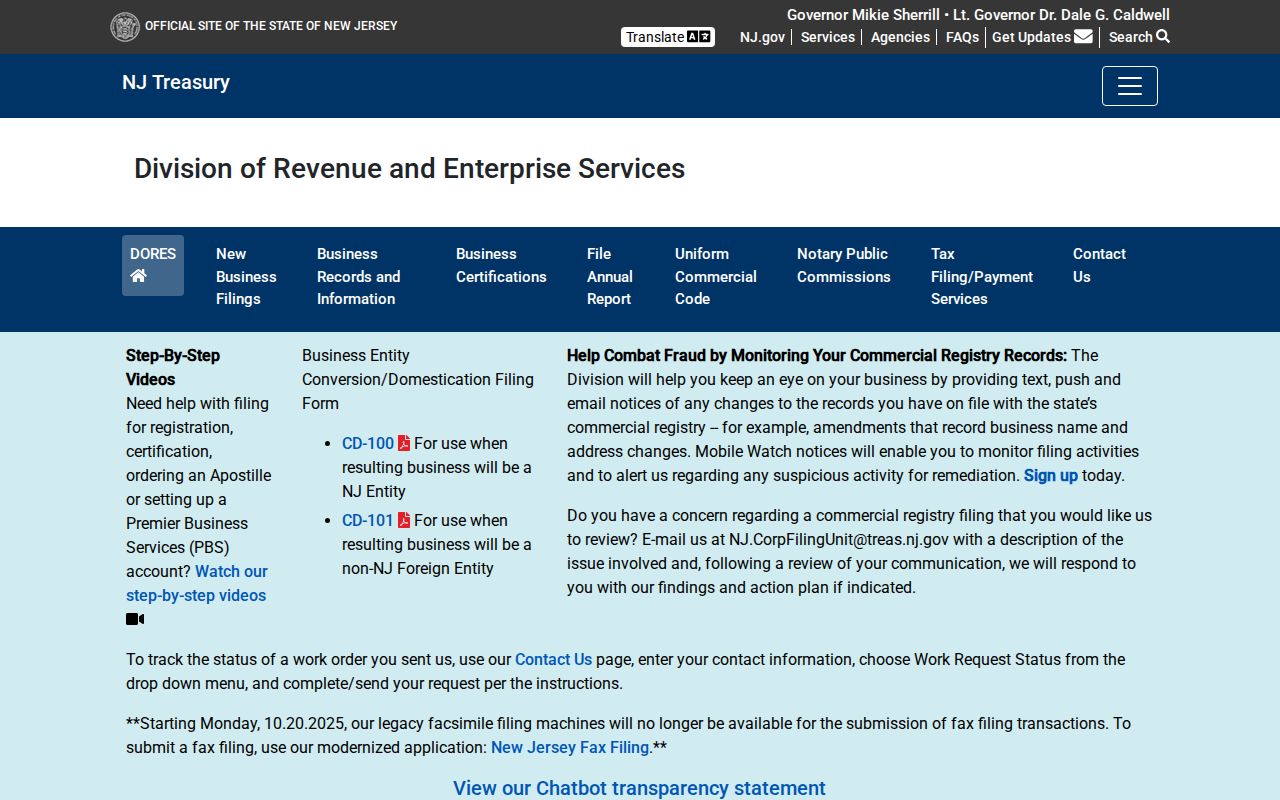
Compare a filing result only with another dated official record, and keep the legal entity name separate from a trade name or a person's name.
Fair Lawn Resident Lookup Privacy Limits
Some information should remain restricted even when a related record is public. New Jersey's Address Confidentiality Program gives eligible participants a legal substitute address and mail forwarding. Daniel's Law protects covered public servants and household members through a redaction process, and NJGIN says hosted parcel and tax-list data may redact owner names for that reason. Juvenile, sealed, expunged, adoption, protected-victim, and certain family records are not ordinary public search results. A blank owner field or restricted court result is an access condition, not a prompt to reconstruct protected details from other sources.
Keep dates of birth, signatures, account numbers, personal contact details, protected addresses, and information about minors out of a public research note. The Driver's Privacy Protection Act also restricts motor-vehicle personal information. If an official result appears wrong, contact the record custodian with the record identifier and correction procedure rather than repeating the claim. Fair Lawn police reports, vital records, and voter materials can have additional redactions beyond the general OPRA process.
Lawful use. Use official resident records for personal research, family history, or a carefully documented official question. Do not use any result to stalk, harass, intimidate, or harm another person.
Note: A protected address should be reported to the responsible agency for redaction review, not repeated or mapped.