
Fair Lawn City Directory Holdings
The Bolger Heritage Center at Ridgewood Public Library holds the main documented run of Fair Lawn volumes. Its regional collection lists directories from 1931 through 1973. Microfilm is available in the Reference area. Entries can carry names, addresses, occupations, workplaces, spouses, removals, death details, advertisements, and institutional listings. That breadth is a starting point, not a guarantee. A regional collection does not prove every Fair Lawn year survives. Nor does it prove that every resident appeared in print. Email heritagecenter@ridgewoodlibrary.org or call 201-670-5600 extension 135 to confirm the reel, reader access, and current hours before you travel.
| Collection | Years | Where Held | Access |
|---|---|---|---|
| Fair Lawn regional city-directory run | 1931 to 1973, subject to reel gaps | Ridgewood Heritage Center Reference area | Microfilm and reference follow-up |
| Heritage Center directory finding aid | Named Fair Lawn entries from 1931 onward | Ridgewood Public Library digital finding aid | Online PDF, then confirm reel sequence |
| Northern New Jersey and Bergen telephone books | 1930 to 1931 and later Bergen-area volumes through 2019 | Bergen County Historical Society finding aid | Holdings inquiry and on-site research |
| Federal census schedules | Public schedules through 1950 | Federal historical records | Household context, not a directory replacement |
The online finding aid lists individual Fair Lawn entries for 1931, 1933, 1935, 1937, 1939, 1941, 1948, 1950, and 1956. Later run material appears too. No complete annual sequence exists. Ask for the year you want by name. Ask whether that reel includes a numerical street section too. A missing reel, a missing page, and a person simply not listed are three results with very different meanings.
Fair Lawn Directory Reels and Gaps
Fair Lawn directory research demands a careful year list. The reported span runs 1931 to 1973. Within it, the years 1932, 1934, 1938, 1942 to 1943, 1945, 1949, 1951, 1953, and 1955 remain unconfirmed in the surviving sequence. A gap is only a gap. Never read one as proof. A missing year does not mean a house sat vacant or a family had left the borough. Make the request narrow instead. Name the year. Ask whether the item is on microfilm or another format. Ask if it includes numerical listings. Copy the details when you find the entry. Take the printed title, publisher, town heading, page or reel, and exact wording.
- 1924: the borough was incorporated as Fairlawn from part of Saddle River Township.
- 1931: the documented Fair Lawn directory run begins in the Heritage Center collection.
- 1933: the borough spelling changed from Fairlawn to Fair Lawn.
- 1973: the listed Fair Lawn directory run reaches its reported end, although exact reel coverage still needs confirmation.
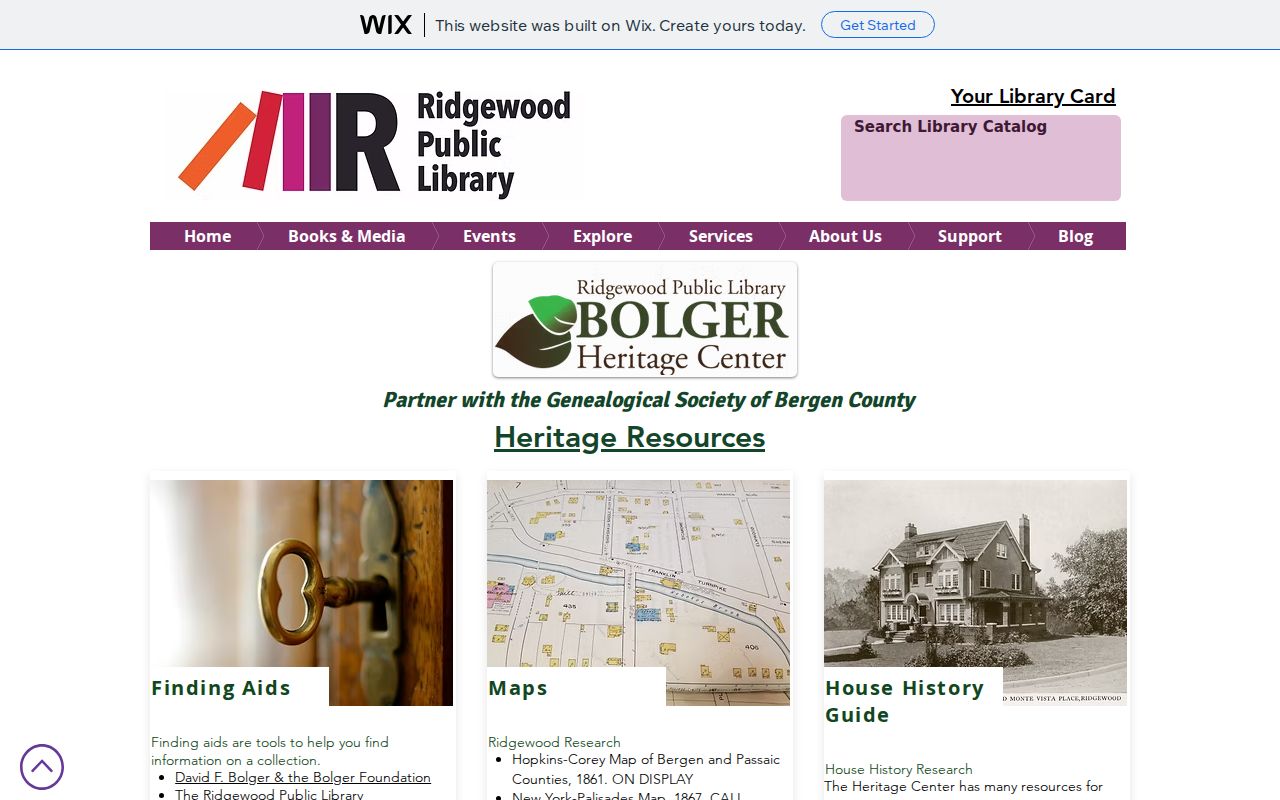
The Heritage Center collection page gathers the regional leads a Fair Lawn resident lookup depends on. Its holdings span city directory volumes, maps, newspapers, and house-history files that help trace past residents and old streets across the county.
Treat the collection description as preparation for a reel request, never as a stand-in for reading the printed or filmed entry itself. The actual directory search stays an in-person or staff-assisted follow-up.
Fair Lawn Directory Name Variants
Older Fair Lawn directory work carries a local naming trap. The borough began as Fairlawn in 1924 and adopted the two-word spelling in 1933. Before incorporation, the relevant jurisdiction can be Saddle River Township. So a directory, census, deed, church record, or newspaper may use several labels. It might say Fairlawn, Fair Lawn, Saddle River Township, a nearby postal label, or a railroad-community description. Search each label where the date makes it plausible. The town heading tells you how a volume was arranged. But it does not settle any modern legal boundary.
Street names need the same care. Always preserve the printed form first. River Road matches County Route 507 in current borough transportation material. Yet an older volume may say only River Road. Never quietly convert a historical street number or road label into a present parcel address. Keep a separate note with the source spelling, the year, and a later map comparison. That keeps the record trail reviewable.
Reading Fair Lawn City Directory Listings
Treat a Fair Lawn directory listing as a dated lead, not a certified residence finding. The Heritage Center describes alphabetical listings by person, business, or government buyer. Some volumes add numerical or reverse lookup as well. Copy what is actually printed before anything else. That habit prevents you from merging two similar names. It also stops you from mistaking an advertisement for a household record. An address can lead to a map, land record, or newspaper. A name paired with an occupation helps separate people who share a common surname.
| Printed name | Copy the surname and given-name form exactly, including initials or alternate spelling. |
|---|---|
| Street address | Keep the house number and street form as printed; do not normalize it inside the citation. |
| Occupation | Note the occupation and place of occupation when the directory gives them. |
| Family clue | Preserve any spouse, removal, or death detail without treating it as independently verified. |
| Business or advertisement | Record the business label and address as a lead for a later source check. |
- Criss-cross section
- A street-ordered or numerical portion of a directory, if that volume includes one, used to begin with an address.
- Householder index
- An alphabetical household-style listing when a volume supplies it; the layout and inclusion rules vary by edition.
- Abbreviation key
- A publisher's guide to shortened terms, when printed. Photograph or transcribe it before interpreting a notation.
Fair Lawn Directory Listings With Local Papers
Pair a directory lead with a dated local paper or map. The Genealogical Society of Bergen County coverage list identifies the Fair Lawn-Radburn News from March 1938 through December 1965. Fair Lawn News follows from 1966 through 1972. Successor titles run through 1999. The list is a holdings guide, not a full-text index. The Fair Lawn Public Library or another holding institution must confirm reel availability, reader policy, scan options, and issue-level detail.
A newspaper notice can explain a move, business change, death, or public event. It can do this near the directory date. It still needs corroboration. For physical context, the Library of Congress Fair Lawn Sanborn item covers 1948 to 1950 in 29 sheets. The set holds 30 images. It shows structures and street layout, but it is not a resident list or a deed. It is not a deed.
Fair Lawn Directory Companion Sources
Telephone books fill gaps in a Fair Lawn city directory reel. A missing year may sit on another shelf. The Bergen County Historical Society finding aid catalogues Northern New Jersey volumes from 1930 to 1931. Bergen-Passaic material follows in 1948. Bergen County white pages appear for 1960 to 1961, and later holdings add Bergen and western Yellow Pages along with scattered volumes running through 2019. The society is a separate repository. It needs its own holdings inquiry. Any residents directory search that reaches beyond the library should contact the society directly about its telephone holdings.
A telephone listing is a different animal. It may omit an unlisted number. Its arrangement follows its own logic. Treat it as a clue to address continuity or a possible household, then weigh it against a directory, newspaper, census, deed, or another dated record before drawing any conclusion about the person.
Trace a Fair Lawn Family in Directories
Family history work rewards patience. Treat each Fair Lawn city directory entry as one point in a dated sequence. Do not read it as a fact standing alone. Names move. Spellings drift. A volume may not survive, or the publisher may simply leave a household out. Start at the closest confirmed year and work outward. Keep the negative results too. A gap in a street directory can matter as much as a hit. Keep any modern identity question separate from the historical trail. Current questions belong to the Fair Lawn resident lookup process. An old directory entry is not proof of who someone is today.
- Find the earliest surviving directory year that may contain the person, household, business, or address.
- Copy the printed name, address, occupation, town heading, and reel or page reference.
- Check the nearest surviving directory years and mark each result as listed, not found, or volume not held.
- Pair the decade with the public federal census through 1950, keeping the census geography separate from the street label.
- Use a newspaper, deed, map, cemetery source, or another independent record to test a move, death detail, or address claim.
Ask the library for a scan or a citation, not a verdict. No library can certify that someone lived there. A useful scan carries real detail. It should show the title, year, publisher, and town heading, plus the page or reel number, the exact name and address, the occupation, nearby entries, and any removal or death note.
Fair Lawn Directory Access Limits
The Fair Lawn city directory has no page-image searching on any public webpage. Access runs in steps. Start with the online Heritage Center description and finding aid. Confirm by email or telephone next. Then view reference-area microfilm or another confirmed format. A paper copy request should name the title. It should also give the issue date or year, the page when known, and the search terms. Library and historical-society holdings do not overlap. A request that fails at one institution may still succeed at the other. Historical listings serve family history, a former address, a local business lead, or neighborhood history.
Use them responsibly. A partial listing must never expose protected information or be used to harass a person. New Jersey address protections and ordinary record gaps can limit what is available. An omission is not proof of a person's absence.